
For many of us, the weekend ritual of pushing a lawnmower back and forth is a double-edged sword. While there is a certain satisfaction in a freshly striped lawn, the time and physical effort required can often eat into the moments we’d rather spend actually enjoying the garden.
Choosing to automate this task is a significant step towards a more relaxed outdoor lifestyle, but the transition from manual to robotic mowing requires a bit of groundwork. Unlike a traditional mower, where you are the navigator, a robot needs to understand the boundaries and nuances of your specific patch of green to work effectively.
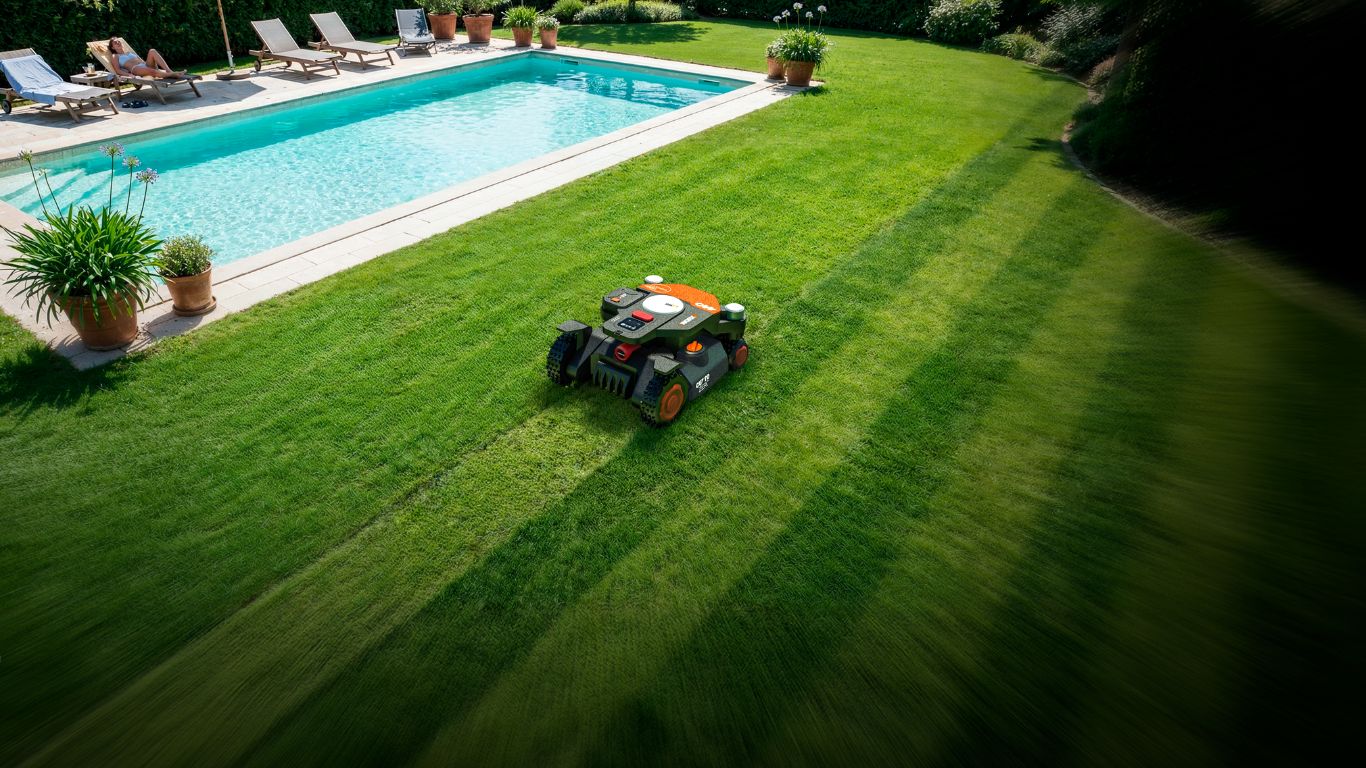
Assessing Your Garden’s Unique Needs
Before looking at specific models, it is essential to audit your garden. Every outdoor space has its own “personality” that will dictate which features are non-negotiable.
• Size and Scale: Garden sizes can vary wildly. Measure your lawn in square metres (m2) to ensure you don’t over-invest in a machine designed for an acre when you have a smaller plot. A mower working within its capacity will complete its cycle more efficiently and experience less wear on its components.
• The Complexity of the Border: Do you have straight edges and clear fences, or is your lawn interrupted by flower beds, stepping stones, and winding paths? Traditional systems often struggle with complex layouts or islands within the grass.
• Incline and Terrain: If your garden isn’t perfectly flat, pay close attention to the gradient. Most robotic mowers can handle a gentle slope, but steep banks require specialised traction and motor power to ensure the machine doesn’t lose its way or slide into a hedge.
Expert Advice: Preparing for Automation
• Define Your Edges: For any autonomous system to thrive, clear boundaries are key. Ensure your lawn edges are neatly defined. If your grass simply fades into a wildflower patch or a gravel path, the mower may struggle to see where the lawn ends.
• Clear the Runway: Small obstacles like fallen branches, stray garden hoses, or children’s toys are the natural enemies of mower blades. Before setting your mower to its schedule, do a quick sweep of the area to prevent unnecessary stoppages.
• Timing is Everything: To keep your grass healthy, avoid mowing when it is saturated. While many modern units are water-resistant, cutting wet grass can lead to clumping, which prevents the fine mulch from being properly absorbed back into the soil as natural fertiliser.
Moving Beyond the Boundary Wire
For years, the biggest hurdle for DIY enthusiasts was the boundary wire. This involved spending an afternoon on hands and knees, pegging a green wire around the entire perimeter of the garden. If the wire broke—perhaps due to a stray garden fork—the mower would simply stop working until the break was found and repaired.
To solve this particular pain point, the industry has shifted toward vision-based and cloud-integrated navigation. By using intelligent sensors and cameras, the need for physical wires is removed, allowing for a drop and mow experience that respects the layout of your garden without the permanent installation of cables.
Introducing the Landroid Vision Cloud
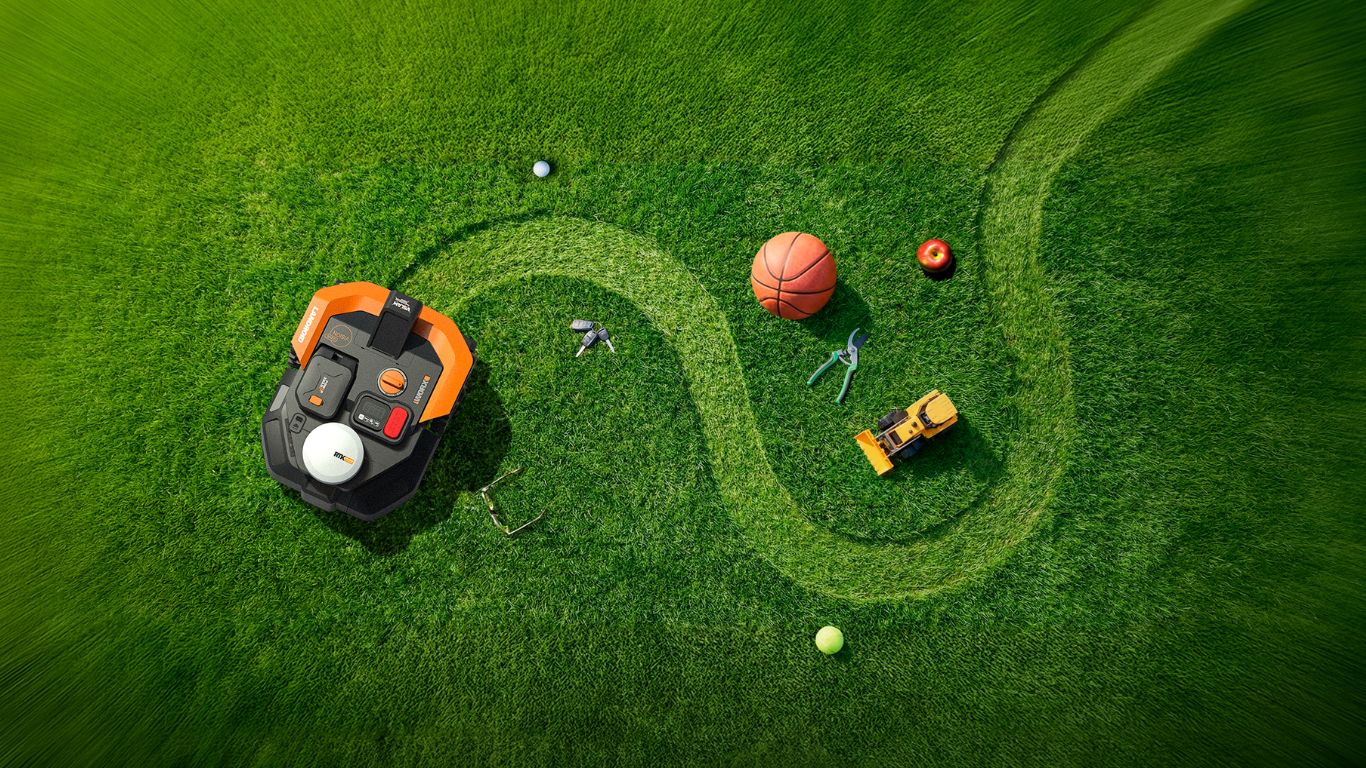
This is where the Worx Landroid Vision Cloud range changes the conversation. Rather than relying on a buried wire, the Vision Cloud uses a combination of high-definition cameras and RTK Cloud positioning. This allows the mower to understand exactly where the grass ends and the patio begins, all while maintaining centimetre-level accuracy through satellite data delivered via the cloud—meaning no unsightly external antennas are needed in your garden.
For those concerned about garden safety, the integrated Vision AI is trained to recognise obstacles in real-time. Whether it’s a pet, a football, or a stray garden clog, the Landroid Vision Cloud perceives the object and manoeuvres around it, reducing the risk of accidental damage.
The PowerShare™ Advantage
One of the most practical benefits of choosing a Worx solution is the 20V PowerShare™ battery system. Unlike many robotic mowers with sealed, internal batteries that require a specialist to replace, the Landroid uses the same 20V battery that powers your Worx cordless drill, hedge trimmer, or leaf blower.
This ecosystem means you can swap batteries between tools to extend your run-time or simply use a spare battery you already own to get the mower back into action instantly. It reduces clutter in the shed and ensures your investment in one tool benefits the rest of your kit.
Selecting the Correct Model
The Landroid Vision Cloud range is designed to fit the specific scale of your project:
| Model | Recommended Lawn Size | Key Feature |
| WR303E | Up to 300m2 | Compact & agile for urban gardens. |
| WR305E | Up to 500m2 | Enhanced battery for medium plots. |
| WR318E | Up to 1800m2 | Built-in “Cut-to-Edge” and electronic height adjustment. |
| WR341E | Up to 1000m2 | All-terrain 4WD for steep slopes (up to 84% incline) and uneven ground. |
Tackling the Gradient: The 4WD Advantage
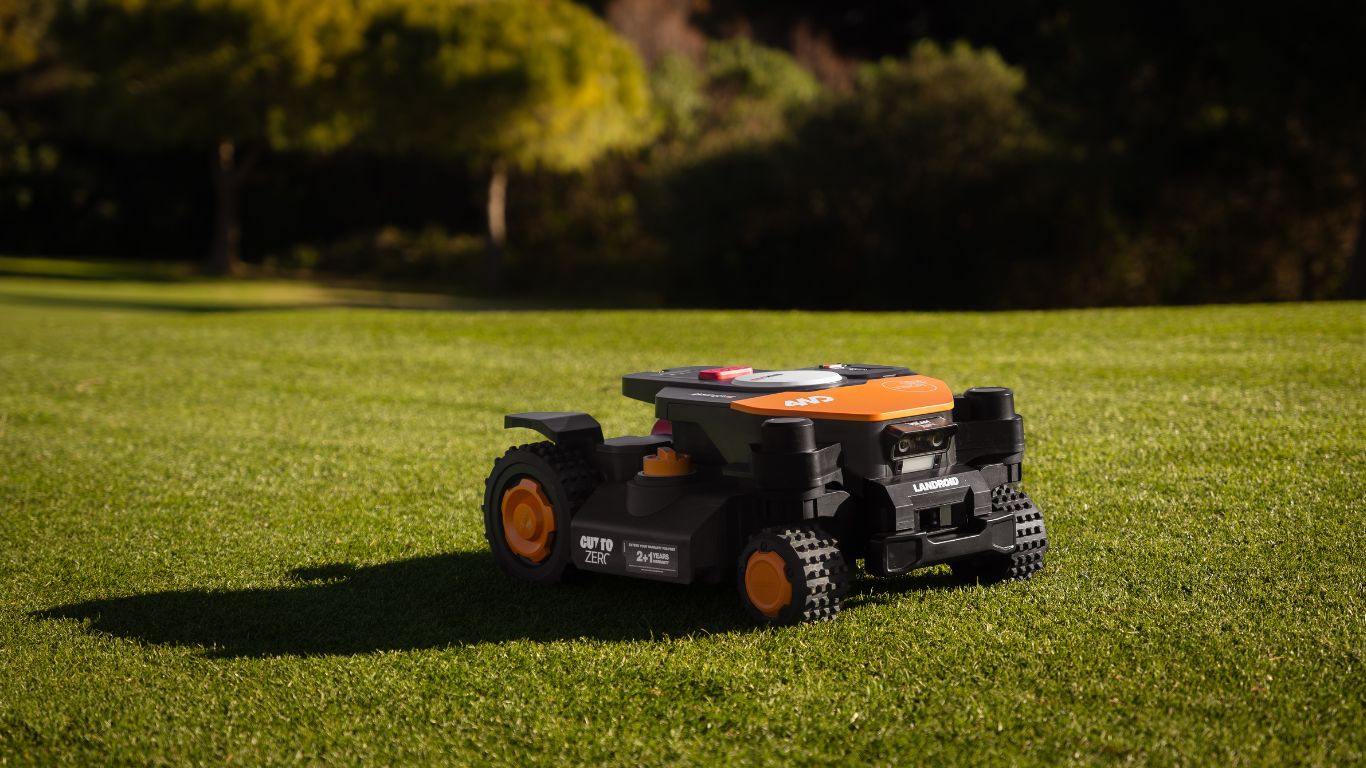
For those with sloped gardens, the WR341E introduces a level of stability previously difficult to achieve with automation. While standard robotic mowers might lose traction on damp grass or steep banks, the 4-wheel drive system ensures that all four wheels maintain a constant grip.
By using independent front and rear axles, the WR341E adapts to the contours of your garden in real-time. This prevents the “turf tearing” that can occur when a mower struggles for purchase, ensuring that even the most challenging parts of your lawn receive the same precise, even finish as the flat sections.
Whether you have a small courtyard or a multi-zone lawn with steep inclines, there is now a Vision Cloud model tailored to the task. By removing the boundary wire and integrating with the PowerShare™ family, maintaining a pristine lawn becomes a background task rather than a weekend chore.
View the Landroid Vision Cloud Range