
British gardens are as diverse as the people who tend them. From the dead-flat lawns of modern suburban developments to the rolling, terraced gardens of the countryside, every plot of land presents its own unique layout. When you are looking to simplify your weekend routine, understanding the layout of your land is the vital first step to achieving a perfectly manicured lawn.
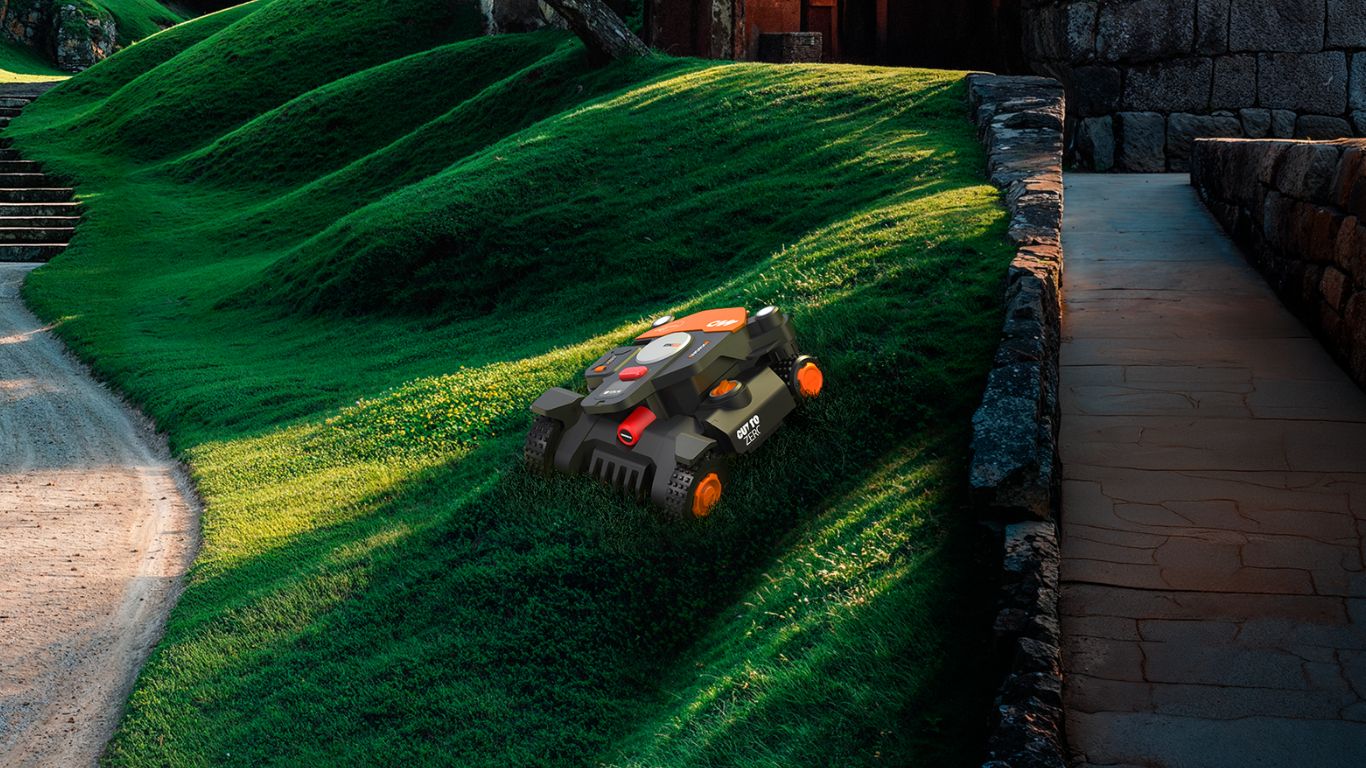
Managing an uneven lawn manually is a frequent source of physical fatigue. Pushing a heavy petrol machine up a steep embankment or wrestling a traditional mower around tight, muddy hollows takes a toll on your back and shoulders. Furthermore, scalping—where the mower blades cut too low on a ridge, leaving unsightly brown patches of bare soil—is a constant risk on undulating ground.
Assessing Your Garden: Technique, Safety, and Timing
Before making any decisions on how to automate your lawn care, you need a clear picture of what your grass actually looks like from a technical perspective.
1. Calculate Your Maximum Gradient
Never guess the steepness of a slope by eye; human perception tends to overestimate angles significantly. To find your true gradient, place a straight 1-metre timber board directly on the steepest part of your slope. Place a spirit level on top, raise the downhill end until it is perfectly level, and measure the vertical distance from the ground to the bottom of the board in centimetres.
The Gradient Formula: If the vertical gap is 20 cm over a 100 cm (1-metre) distance, your slope is 20%. If it rises 40 cm over that same 1-metre stretch, you are dealing with a steep 40% incline.
2. Identify Traction Hotspots and Poor Drainage
Walk your garden a day after heavy rainfall. Note any areas where water pools or where the soil stays soft and mossy. Traditional heavy wheels will easily spin in these zones, ripping up the turf and turning a beautiful green lawn into a muddy track.
3. Map Out Obstacles and Boundaries
Take note of transitions. Are your flower beds flush with the lawn, or are they raised? Do you have gravel paths cutting through the grass? A straightforward, open rectangle requires a very different approach to a garden split into multiple zones connected by narrow turf pathways.
Matching Drive Systems to Your Terrain
To avoid the physical strain of manual uphill mowing and the turf damage caused by inadequate traction, automated mowing systems rely on distinct drivetrains. Just like motor vehicles, the choice between two-wheel drive (2WD) and four-wheel drive (4WD) determines how efficiently a machine handles the specific contours of your property.
The 4WD Series: Conquering Complex Slopes
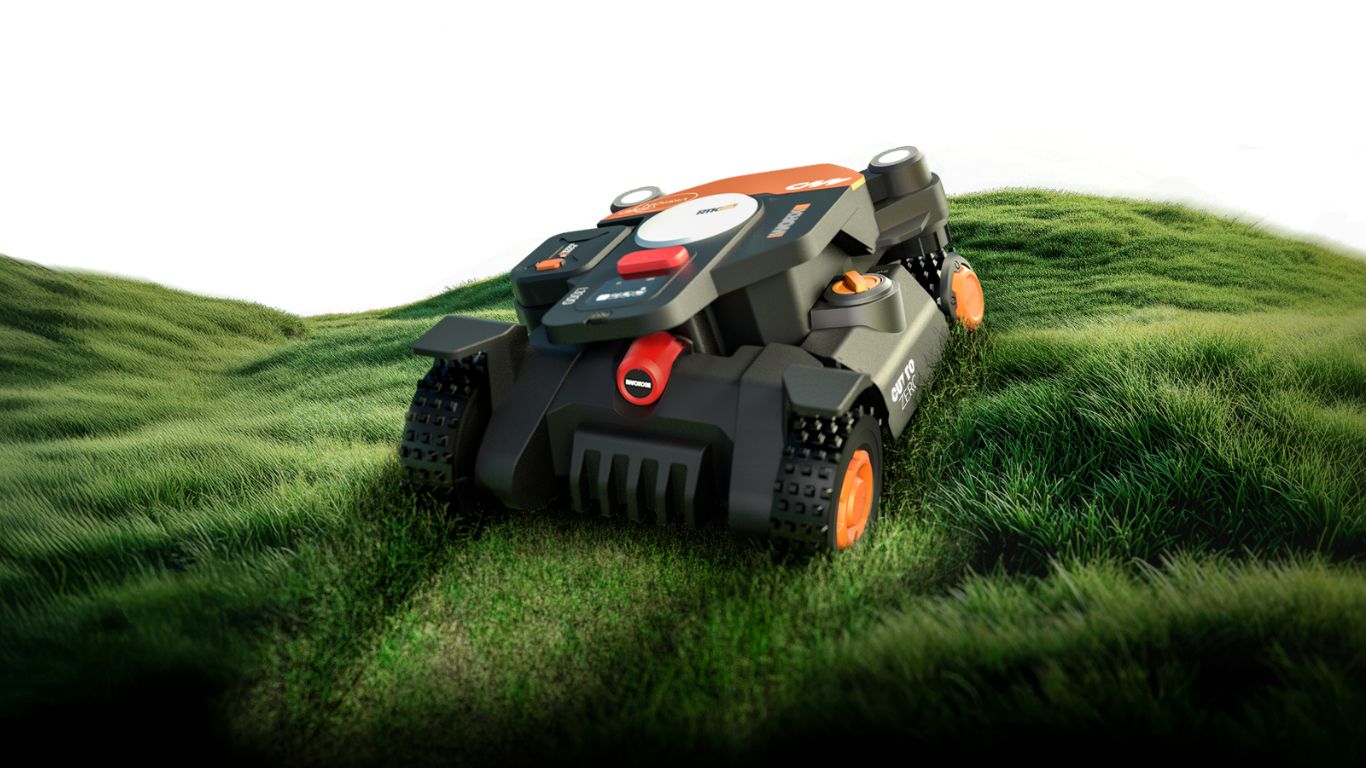
For those with complex, tiered landscapes, steep banks, or lawns that resemble a countryside hillside, a four-wheel drive system becomes a necessity rather than a luxury.
• Constant Traction: With a four-motor drivetrain and independent axles, a 4WD system maintains constant grip. Where a standard drive system might spin its wheels on a damp incline—scarring the grass in the process—all-wheel traction allows the machine to climb steadily without slipping.
• Slope Specialisation: While standard automatic mowers often lose control or slide sideways on steep inclines, premium 4WD units are engineered to maintain their heading on slopes up to 40° (or an 84% gradient).
• Ground Contour Adaptation: Advanced 4WD options often utilise an articulated chassis. This allows the machine to flex and adapt to the dips and hollows of uneven ground in real-time. By flexing across the terrain, the cutting deck stays at a consistent height above the soil, completely eliminating the risk of scalping your ridges.
The Worx Solution: Landroid Vision Cloud
This is exactly why the Worx Landroid Vision Cloud range is split into two distinct categories: 2WD and 4WD. While both share the same industry-leading “brain,” their “brawn” is tailored to different landscapes.
| Feature | Landroid Vision 2WD | Landroid Vision 4WD |
| Ideal Terrain | Flat to gentle slopes, patios | Steep banks, rugged terrain, dips |
| Max Incline Capability | Standard residential gradients | Up to 40° (84% slope) |
| Drivetrain | Dual rear-wheel motors | Four independent motors and axles |
| Chassis Type | Fixed rigid frame | Articulated contour-following |
Don’t let the “entry-level” label fool you regarding the 2WD options. Every single model in the Landroid Vision Cloud range features the exact same high-definition Vision AI camera and RTK Cloud precision. They don’t require restrictive perimeter wires; they use their onboard eyes to instantly recognise the edge of the lawn, paths, and obstacles.
Selecting the right machine ensures your lawn isn’t just mown, but mastered. Evaluate your garden’s steepest points, map your obstacles, and note any drainage issues. That technical snapshot will tell you exactly which drive system is built for your property.
Explore the engineering behind our smart mowing systems and view the full capabilities of the Worx Landroid Vision Cloud range here.